

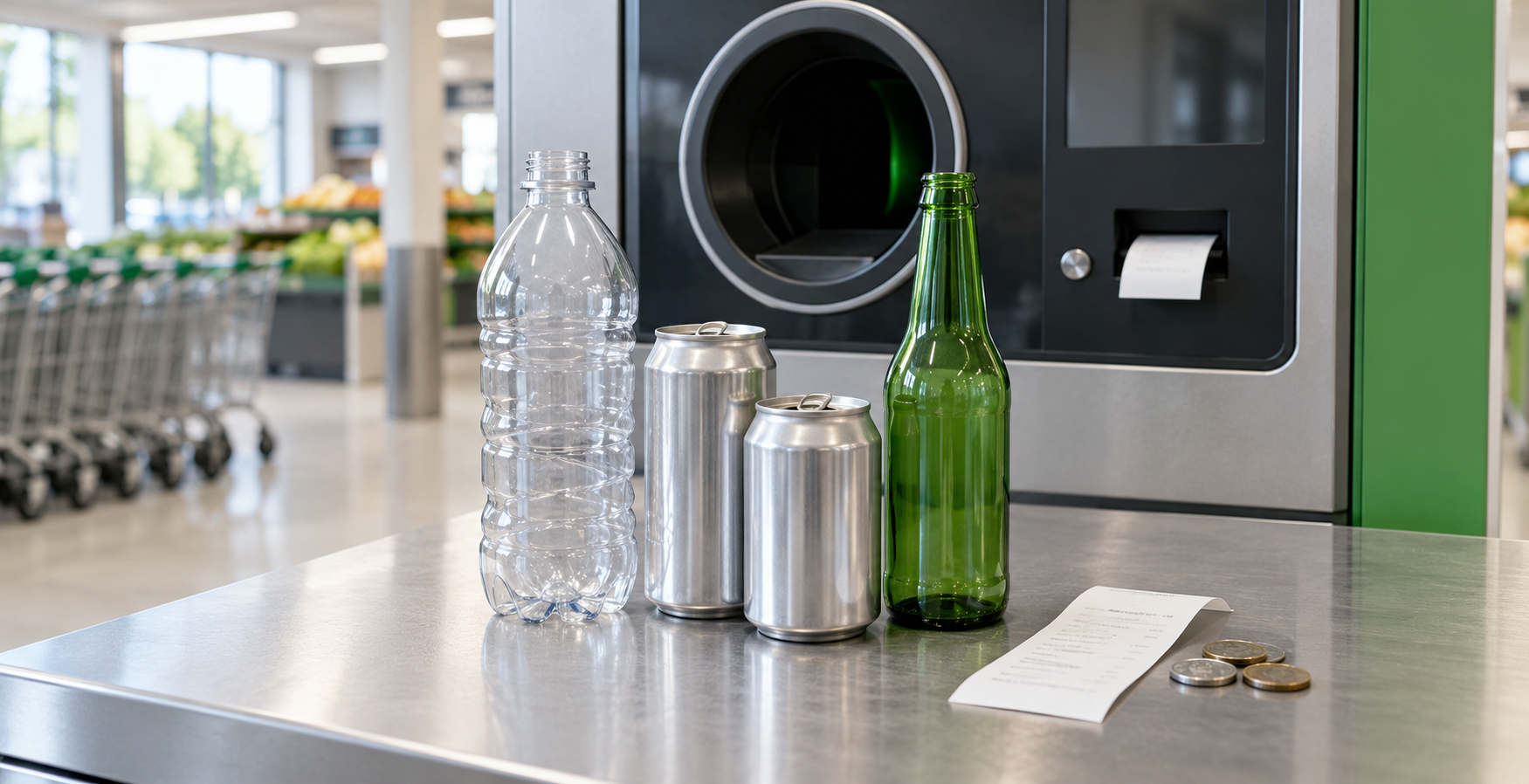
The consumer deposit on a beverage container remains 10 cents. The participation-fee proposal submitted for 2027 concerns beverage producers and importers in the system. These are different charges; revising one does not automatically change the other.
What does the unclaimed €7.5 million represent?
Latvian Radio’s 25 October report gives an estimate: around 75 million containers, or 15%, are not returned annually, representing €7.5 million.
The calculation is 75 million × €0.10. It describes deposits on unreturned containers, rather than proving the operator’s net profit or an audited result for a particular year. Incoming funds must be assessed alongside system expenditure.
The operator explains that participation fees, material sales and unclaimed deposits fund the system. Funds cover collection, logistics, sorting and development; annual surpluses are not distributed as dividends. A profit claim therefore requires a separate assessment of financial statements.
Two charges serving different purposes
The Packaging Law defines the deposit as the consumer’s security payment, refunded when the container is returned. The deposit packager pays the operator’s participation fee. Paragraph 7 of Cabinet Regulation No 519 sets the deposit at €0.10 per unit.
Higher business costs and a higher deposit are therefore not synonymous. Any increase in a drink’s shelf price would also be a separate commercial decision: changes in participation tariffs cannot automatically determine a specific consumer price.
What is proposed for 2027?
DIO submitted its proposal to the regulator SPRK on 14 September, seeking application from 1 January 2027. Glass and plastic charges would rise; ferrous metal (Fe) would remain at zero, while aluminium would have a larger negative fee. Submitting a proposal does not itself mean that the tariff has been approved.
The 4–5% mentioned by Radio must therefore not be applied uniformly to every material. Businesses need the rate for their own product mix, its unit of measurement and the regulator’s final decision. A general percentage does not justify recalculating every invoice.
How can a business calculate its exposure?
A practical model separates planned packaging placed on the market by material, then multiplies units in each group by the relevant participation fee. Compare the current result with the possible result for next year.
For example, a hypothetical increase of €0.001 per unit would add €100 for 100,000 units. This illustrates the calculation; it does not quote a proposed tariff. Material proportions and sales volumes may change the result more than the industry’s headline percentage.
- Track consumer deposit flows separately from business participation costs.
- Check packaging-material classifications and planned quantities.
- Retain both current-fee and proposal scenarios in the budget, recording the dates of the documents used.
- Before changing prices or contracts, check the approved SPRK decision and application date.
- Request a cost breakdown when a supplier announces higher prices, so participation fees are not confused with deposits.
Options for business record-keeping and document workflows can be assessed in the services for businesses section, with business listings available for comparing offers. Verify the specific service’s scope with its provider.
Must the deposit increase in 2029?
No. The ministry’s reference to 2029 concerns possible reassessment, not an adopted deadline for raising the deposit.
For consumers, returning containers remains the practical priority. Deposits paid on 100 eligible containers, for example, total €10. A business can agree where to collect them, who arranges their return and how the money received is recorded.
Comments
No comments yet. Yours could be the first!
Add a comment