

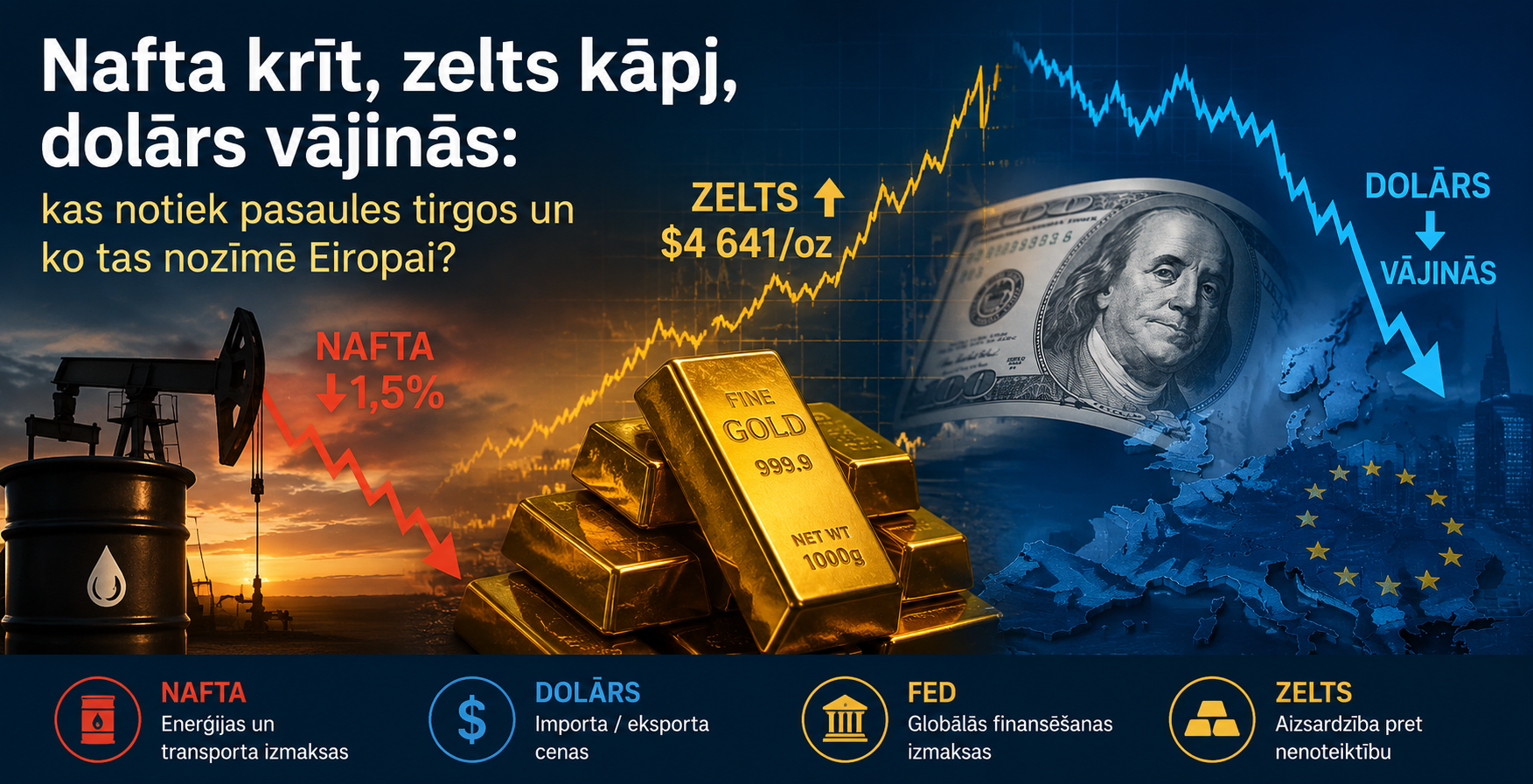
Global financial markets started the new week with an unusual combination: oil is falling, gold is rising and the US dollar remains weak. On the morning of 24 August, Brent crude fell about 1.4% to $93.07 a barrel, while WTI declined 1.6% to $85.64.
At the same time, gold reached its highest level in more than three months at around $4,644 per ounce. Investors are awaiting details of new US sanctions against Iran, upcoming US inflation data and Federal Reserve Chair Kevin Warsh's speech at Jackson Hole.
Why is oil falling?
The decline currently looks more like profit-taking after last week's sharp rally than the disappearance of geopolitical risk. Brent gained approximately 6.6% during the previous week.
Markets are now waiting for details of new US economic sanctions against Iran. The Strait of Hormuz and the risk of disruption to Gulf oil exports remain important sources of uncertainty.
Why is gold continuing to rise?
Gold is being supported by geopolitical uncertainty, concerns over US public debt and a weaker dollar. A softer dollar makes dollar-priced gold cheaper for investors using other currencies.
After a sharp rise in August, traders are now focused on US inflation figures and the Federal Reserve's next signals on monetary policy.
Why is the dollar weakening?
The US dollar remains close to multi-month lows. Investors are concerned about growing US government debt and the Treasury's decision to increase purchases of long-dated government bonds.
The euro traded around $1.1680. A weaker dollar can reduce the euro cost of goods purchased in dollars, although it may also reduce the competitiveness of European exporters earning revenue in the United States.
What does this mean for businesses in Latvia?
- Oil: affects fuel, logistics, transport and production costs.
- Dollar: changes the euro cost of goods and raw materials priced in US dollars.
- Fed: US interest-rate policy influences bond markets, global financing costs and the room available to the ECB.
- Gold: rising prices often indicate stronger demand for protection against economic and geopolitical uncertainty.
The key signal is not one asset alone, but the combination: energy prices are easing, the dollar is weakening and gold is reaching new local highs.
What will markets watch next?
US PCE inflation data and Federal Reserve Chair Kevin Warsh's Jackson Hole speech will be closely watched this week. Both could change expectations for interest rates and trigger new moves in currencies, bonds, equities and gold.
This article is for informational purposes only and does not constitute individual investment advice. Market prices reflect conditions on the morning of 24 August 2026 and may change rapidly.
Comments
No comments yet. Yours could be the first!
Add a comment