

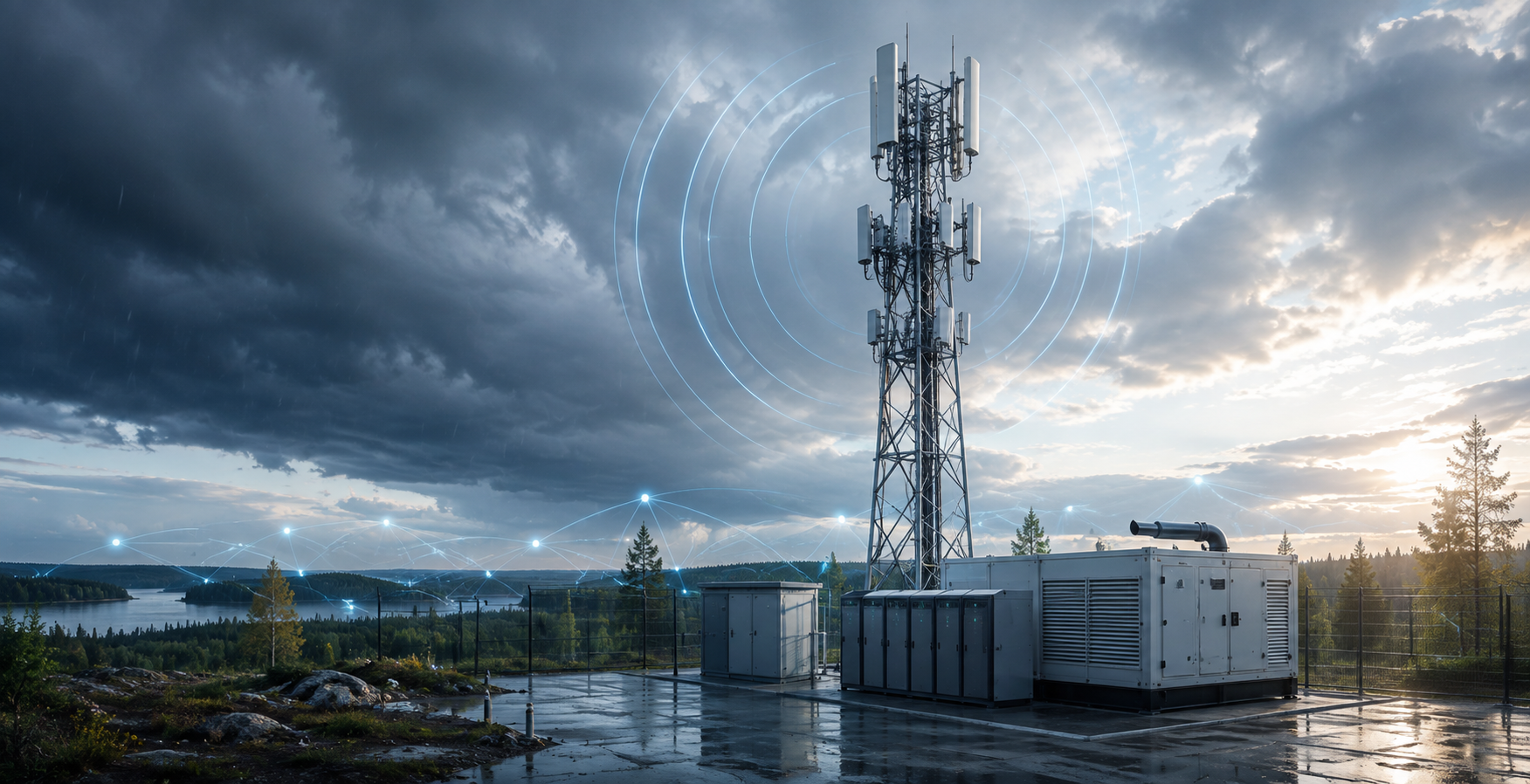
Following storm-related power and mobile network outages, Latvia is preparing a plan that could introduce stronger resilience requirements for critical telecommunications infrastructure. On 26 August, Transport Minister Rihards Kozlovskis instructed mobile operators, LVRTC, Tet and the Ministry of Transport to prepare an emergency communications resilience action plan by 11 September.
Importantly, no specific mandatory technical requirements have yet been adopted. The plan will examine both possible regulatory changes and the investments required to strengthen critical infrastructure.
What could be required from mobile base stations?
The Ministry of Transport wants to establish a minimum resilience level for electronic communications infrastructure, with particular attention to the most critical base stations and network nodes.
Possible requirements include:
- backup power supplies;
- minimum autonomous operating time;
- generator connection capability;
- reserves of mobile generators;
- fuel availability;
- operator response capability during emergencies.
No specific number of hours has yet been set for how long a critical base station would need to operate without external electricity. This remains one of the issues to be assessed.
Which sites could face stricter requirements?
A risk-based approach is being considered. Priority could be given to base stations and network nodes whose failure could affect a large geographical area, many residents, emergency services or other critical infrastructure.
A new market for generators, batteries and energy storage?
If minimum resilience requirements are introduced, operators may need additional infrastructure investment. This could increase demand for UPS systems, batteries, generators, energy-storage solutions, fuel logistics, remote network monitoring and infrastructure maintenance services.
The Ministry has also indicated that the entire investment burden should not fall solely on private telecommunications operators, meaning financing options will also need to be assessed.
What other solutions are being considered?
Latvia is also discussing national roaming for emergency situations. This could allow customers to connect to another operator's network when their own provider's infrastructure is unavailable in a particular area.
However, roaming cannot solve a situation in which all operators' base stations lose power simultaneously. Physical infrastructure resilience and backup electricity therefore remain essential.
What happens on 11 September?
The action plan must be ready by that date. This does not mean new requirements will automatically enter into force on 11 September. Regulatory changes, funding and specific technical standards would still need to be decided afterwards.
For companies supplying backup power, generators, batteries and telecommunications infrastructure, this is a market segment worth monitoring closely over the coming months.
Comments
No comments yet. Yours could be the first!
Add a comment