

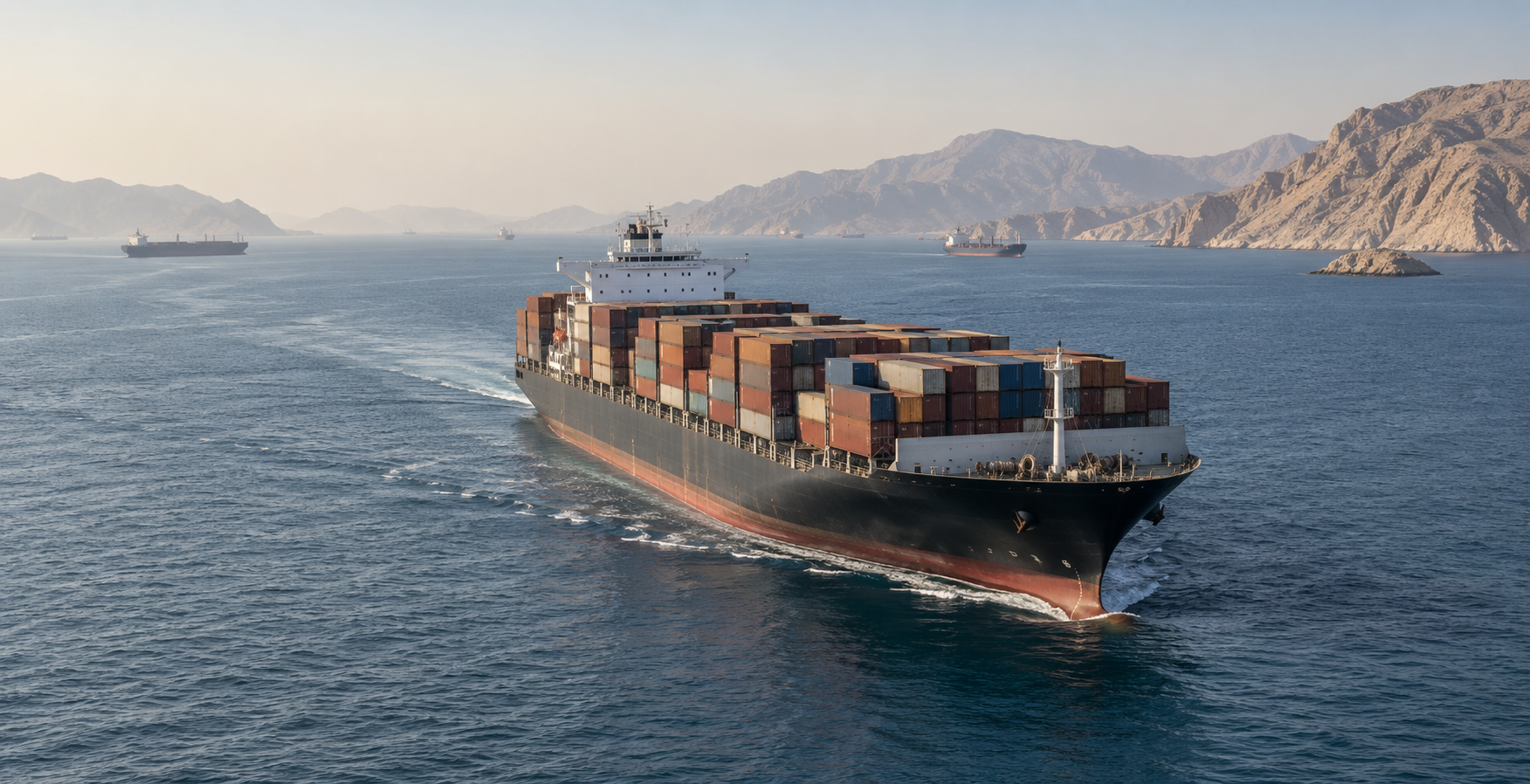
For importers and exporters, the problem is no longer limited to the price of oil—the movement of goods itself is becoming more expensive. Lower traffic through the Strait of Hormuz, rising marine fuel prices and possible new navigation restrictions increase the likelihood of fuel, insurance and security surcharges.
This is not merely a Middle Eastern energy story for Latvian businesses. Even when a shipment does not pass through Hormuz, global bunker prices, vessel availability and carrier surcharges can affect other routes.
What has changed in the energy market?
On 6 September 2026, seven OPEC+ countries decided to maintain their September production requirements for October. The decision therefore provides for no further production increase in October.
It covers Saudi Arabia, Russia, Iraq, Kuwait, Kazakhstan, Algeria and Oman. Their next meeting is scheduled for 4 October.
A production target is not the same as oil physically reaching the market. Conflict, port operations, vessel movements and access to insurance can constrain supply even when official production requirements remain unchanged.
Why is Hormuz becoming a transport problem?
According to Kpler data reported by Reuters, the ten-day moving average for commodity-vessel transits through the Strait of Hormuz fell to 10 ships per day on 6 September—the lowest level since May.
The figure does not cover all global shipping and does not mean that the strait is completely closed. It nevertheless indicates a substantial weakening of commodity flows through one of the world’s most important energy corridors.
Iran has also announced plans to establish a new exclusion zone near Hormuz. Its exact boundaries and operating rules had not been published when this article was prepared. Businesses should therefore treat it as an additional risk, not as an already implemented shipping ban.
Marine fuel is rising faster than Brent crude
By 1 September, the price of very-low-sulphur fuel oil, or VLSFO, in Singapore had increased by 76% since the beginning of the war involving Iran, reaching almost USD 825 per tonne. Brent crude had risen by approximately 40% over the same period.
Shorter-term pressure also remains visible: Brent gained 7.8% in the week ending 4 September.
Fuel-oil inventories in Singapore, the Amsterdam–Rotterdam–Antwerp region and Fujairah are approximately 30% below their three-year seasonal averages. Marine-fuel prices are therefore being affected not only by crude prices but also by reduced refining, lower exports and refiners prioritising petrol and diesel production.
How can these costs reach a Latvian company?
- Fuel surcharges. Carriers may increase bunker-adjustment charges even on routes that do not pass through Hormuz.
- War-risk and security costs. Insurance may become more expensive for cargoes, vessels and ports directly exposed to the region.
- Longer lead times. Rerouting, transshipment disruption and vessel delays can increase storage and container costs.
- Working-capital pressure. Longer transit times leave company funds tied up in inventory for longer.
- Margin pressure. Businesses may be unable to pass new transport costs to customers immediately.
The effect will not be identical for every company. It will depend on the origin of the goods, ports and transshipment points, mode of transport, freight contract, applicable Incoterms and which party carries the risk of unexpected surcharges.
Do all shipments between Latvia and Asia pass through Hormuz?
No. Many container routes between East Asia and Northern Europe do not cross the Strait of Hormuz. The most direct exposure concerns goods, raw materials and energy products originating from, destined for or transshipped in the Gulf region.
The indirect effect can be broader. Marine fuel is traded globally, and carriers may distribute cost increases across multiple routes. Vessel redeployment may also affect capacity and schedule reliability in other markets.
What should a business check now?
- Map supply routes, including origins, ports and transshipment points.
- Ask freight forwarders to separate base freight from fuel, emergency and war-risk surcharges.
- Review the applicable Incoterms and determine which party bears additional costs after booking.
- Calculate the effect of higher transport costs on the margin of each product group.
- Assess alternative suppliers, routes or transport modes for critical goods.
- Review quotation-validity periods and cost-adjustment clauses.
- Set safety stocks according to potential delays instead of accumulating excessive inventory.
Which indicators should be monitored?
- commodity-vessel traffic through the Strait of Hormuz;
- Singapore VLSFO prices and inventories at major bunkering hubs;
- carrier announcements of new fuel or emergency surcharges;
- the actual boundaries and rules of Iran’s planned exclusion zone;
- the outcome of the 4 October OPEC+ meeting;
- changes in lead times and schedule reliability on the company’s routes.
Frequently asked questions
Will OPEC+ increase production in October?
No. Seven OPEC+ countries decided to maintain their September production requirements for October. Their next meeting is scheduled for 4 October.
Is the Strait of Hormuz closed?
No. However, commodity-vessel traffic has fallen substantially, and Iran has announced an exclusion-zone plan whose exact rules have not yet been published.
Is USD 825 per tonne the current VLSFO price?
It is the Singapore price level for 1 September 2026 cited by Reuters. The market is moving rapidly, so businesses should obtain a current quotation for each shipment.
Does a higher marine-fuel price automatically produce an equal increase in freight rates?
No. The final price depends on the route, contract, vessel type, carrier fuel policy and demand for transport. The increase may appear in either the base freight rate or separate surcharges.
Information updated on 7 September 2026. Vessel traffic, fuel prices and security restrictions may change rapidly.
Comments
No comments yet. Yours could be the first!
Add a comment