

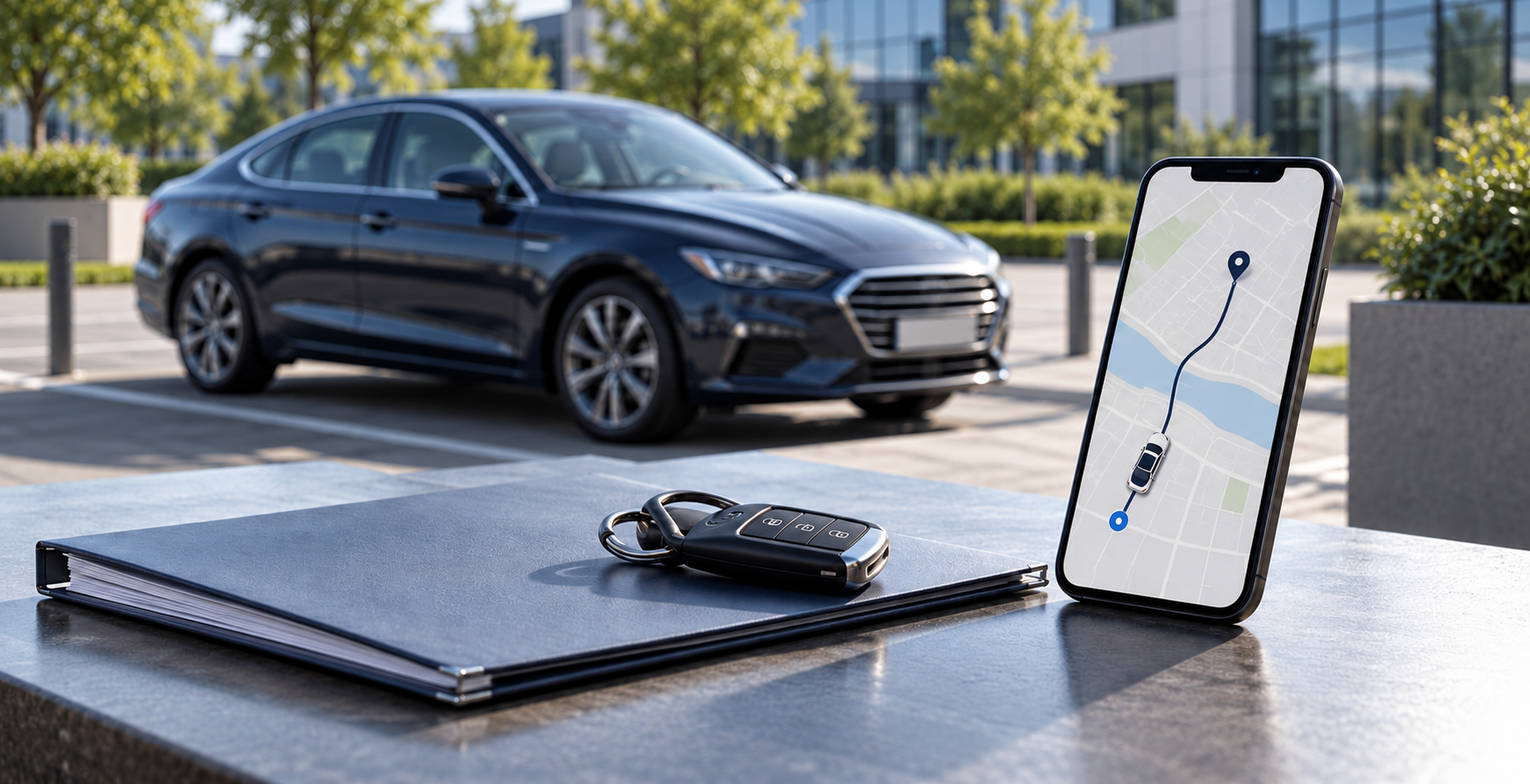
Latvia is preparing to let sole traders provide commercial passenger services using cars they lease as private individuals. As of 26 October 2026, this remains a proposal. TAP draft 25-TA-1072 is undergoing interinstitutional consultation; the latest round runs from 22 to 29 October.
Who would qualify?
Under the draft, the registered vehicle holder and sole trader must be the same person. The owner would consent through the Road Transport Administration's (ATD) electronic service. The provision is proposed to apply from 1 July 2027.
The service described by ATD is commercial passenger transport by car, booked online and paid cashlessly. This is a category alongside taxi services. Operators need a licence; each car needs a licence card. Current requirements call for the vehicle to be registered as owned or held by the operator.
Would the lease payment replace other costs?
No. The Finance Ministry's opinion calls for coordination with company car tax, known as UVTN, establishing a tax obligation in this situation. This is the direction of related amendments, not an already adopted new tax regime.
The explanatory memorandum cites Bolt figures: up to 100,000 unserved trips monthly and car rental of €200–350 weekly. These are platform-provided supporting figures, not current official statistics or a guaranteed price. It also envisages withdrawal of owner consent, removing this basis for vehicle use.
Our editorial conclusion: comparing rental charges only with lease payments would be incomplete. A decision needs a calculation for the same operating volume. Identify separately the costs that would remain payable even during a week without revenue.
What should you check before choosing a car?
This editorial planning checklist helps collect the documents and answers needed for a decision. It does not replace an individual legal or tax assessment.
- Establish the parties' roles. Gather the registration certificate, lease contract and trader details. Record the owner, registered holder and intended service provider. Ask for an explanation of any mismatch.
- Obtain a specific lease offer. Describe commercial passenger services, expected mileage and working patterns. Ask whether consent would change the price, restrictions or termination terms. A generic answer about using the car for work is insufficient.
- Check insurance cover. Explain the intended use to the insurer and request a written answer on applicable cover, excesses and exclusions. Budget using your actual quotation, rather than another driver's payment.
- Create a single cost sheet. Include financing, platform commissions, energy, servicing, tyres, insurance and administration. List taxes separately and check the rules applicable to your circumstances with an accountant.
- Test an interruption scenario. Calculate how you would meet payments during repairs, illness or withdrawal of consent. Identify reserves, a possible replacement arrangement and contractual termination costs, if any.
How can you decide while legislation is still being prepared?
Prepare two separate scenarios: operating under current requirements and operating after the possible adoption of the changes. For each, record the conditions without which the plan cannot work. If the advantage disappears when orders fall or repair costs rise, reconsider the scale of your commitments.
Do not schedule the first paid trip on the strength of a headline. Before starting, recheck adopted legislation, licensing conditions and actual permissions. A financing offer mentioning a possible future easing is insufficient on its own.
For organising business documents and accounting, consider services for businesses. When seeking an external accounting or document preparation specialist, explore business listings, checking transport-sector experience and the scope of the service separately.
Comments
No comments yet. Yours could be the first!
Add a comment