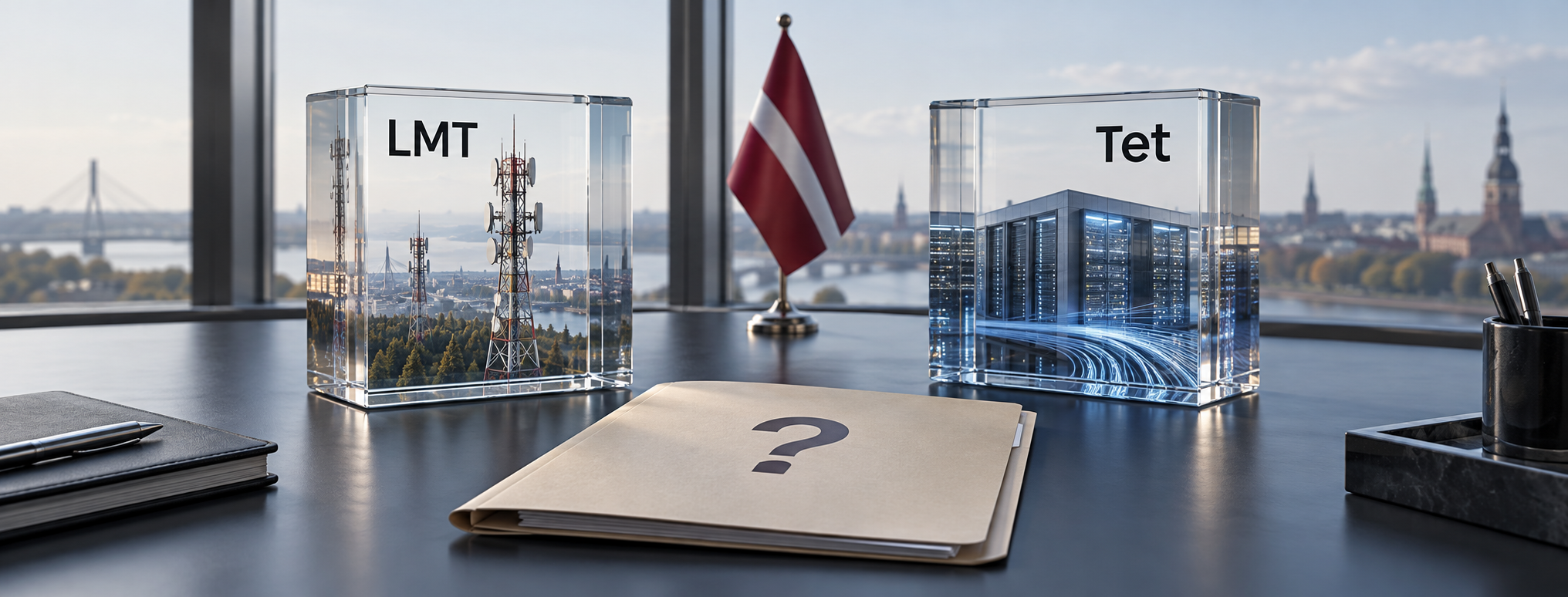
On 13 October, the government requested a buyback assessment; a merger is the fallback. No external advisers are planned. Deadlines: 17.11.2026 — LMT/Tet proposals; 24.11.2026 — Possessor's consolidation and assessment; 01.12.2026 — Ministry of Economics report to government. The Cabinet announcement does not confirm a completed deal.
Why is a memorandum not yet a purchase agreement?
On 17 July 2025, Telia announced a memorandum with the Latvian state, Latvenergo and LVRTC to sell all its shares in Tet and LMT. At the time, a definitive agreement was planned by year-end, with completion in the first half of 2026. These were intended deadlines.
Businesses will recognise the distinction: agreement on the direction of negotiations does not mean agreement on every payment, financing and liability term. The quality of a deal cannot therefore be judged by the number of announcements. What matters is who takes on the obligations, how they will repay them and what condition the company will be in after the seller is paid.
Can a company simply buy itself?
Section 192 of the Commercial Law permits a limited liability company (SIA) to acquire its own shares in specified circumstances, including a reduction of share capital and cancellation of shares. A buyback is therefore more than a money transfer: a legally compliant structure must be chosen. The public request alone does not establish which specific mechanism the companies will propose.
Editorial conclusion: funding availability and legal feasibility must be assessed together. A model that appears straightforward in a political announcement must also be explained in the transaction documents — who will receive the shares, how capital will change and who will subsequently make decisions.
A profitability measure is not cash reserved for a buyback
Tet's published half-year results show EBITDA of €24.9 million for the company and €31.9 million for the group in the first half of 2026. The company also planned €43.7 million of investment this year in infrastructure, network resilience and IT systems. These figures have different scopes; they do not establish the amount available for a buyback.
The analysis should consider cash flow after day-to-day requirements, taxes, debt servicing and necessary investment. Borrowing can help finance an ownership change, but interest and repayment schedules create future obligations. EBITDA alone cannot establish either a safe borrowing level or whether a buyback would constrain investment.
Three questions for assessing a proposal
- Who will pay? How much would come from the companies' own funds, borrowing or other financing, and who would bear the risk if revenue fell short of expectations?
- What will remain for development? After payments, will sufficient funds remain for network maintenance, cybersecurity and new services?
- How will results be measured? What verifiable benefits are expected for customers and owners, what are the delivery deadlines and who is accountable for them?
These are editorial assessment questions, not approved transaction terms. They help business customers distinguish ownership restructuring from promises of better connectivity or lower prices. Those benefits will need to be substantiated separately.
Comments
No comments yet. Yours could be the first!
Add a comment