

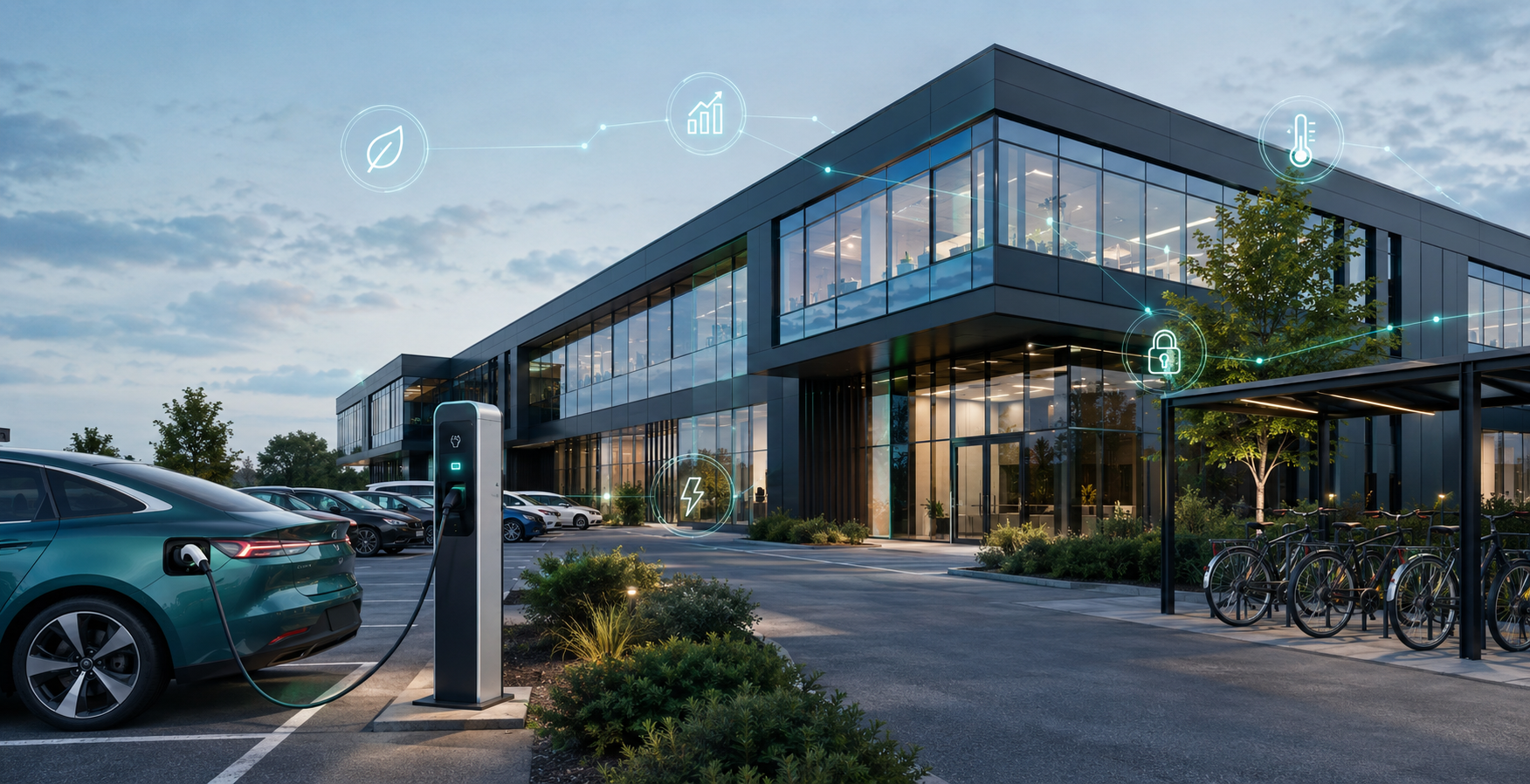
On 28 August 2026, amendments to Latvia's minimum energy-efficiency requirements for existing buildings entered into force. The rules cover electric-vehicle charging, bicycle infrastructure, building-control systems, automated lighting and energy consumption.
The amendments are already in force, but several practical obligations have later transition deadlines.
What must be done by 1 January 2027?
Non-residential buildings with more than 20 car parking spaces must provide one of the following:
- at least one EV charging point for every 10 parking spaces; or
- cable ducts for at least 50% of parking spaces to allow future charging-point installation.
Bicycle parking must also be provided for at least 10% of the building's total user capacity, including space for larger-than-standard bicycles.
Do the requirements apply without exceptions?
No. The rules include exemptions and flexible solutions. Bicycle-parking requirements may, for example, be adjusted where access by bicycle is objectively impractical or inconsistent with the building's function.
Retail and wholesale sites where vehicles are normally parked for no more than two hours may use fewer but higher-powered chargers, provided equivalent total charging capacity is maintained.
What changes for building automation?
Non-residential buildings will also be required to provide automatic lighting controls where technically and economically feasible. The requirement will be phased in:
- from 31 December 2027 for buildings with relevant heating, ventilation or air-conditioning systems above 290 kW;
- from 31 December 2029 for systems above 70 kW.
Building automation and control systems must also support interoperability through open communication protocols, while indoor temperature, humidity and CO2 monitoring is added to the requirements.
Energy-efficiency limits will tighten gradually
Non-residential buildings will also face specific primary-energy consumption limits. From 2030 through 2032 the limit will be 550 kWh/m² per year, falling to 470 kWh/m² per year from 2033.
What should businesses check now?
- the number of parking spaces associated with the building;
- whether EV chargers or cable infrastructure will be required;
- whether sufficient bicycle parking is available;
- the rated capacity of heating, ventilation and cooling systems;
- whether upcoming renovations should already include the new requirements.
For offices, shops, warehouses and other large non-residential properties, the 2027 deadline is close enough that EV and bicycle infrastructure planning should begin now.
Comments
No comments yet. Yours could be the first!
Add a comment