
Alcohol at 20? What Latvia’s health ministry proposals mean for retailers
Latvia’s health ministry proposes an alcohol age of 20 and bans on advertising and petrol station sales. The proposals still await government review.


Latvia’s health ministry proposes an alcohol age of 20 and bans on advertising and petrol station sales. The proposals still await government review.

Latvia's central bank governor advocates retraining to help employees move into the private sector. This is not a specific redundancy announcement, while the latest quarterly comparison checked shows job numbers rising in both sectors.

Petroleum product transactions require attention to both delivery documents and product characteristics. We explain the distinction between criminal proceedings, a tax assessment and a company's verifiable responsibility.

The exchange figure in the news is not a business’s final tariff. Assessing costs requires checking contract terms, consumption timing and other bill components.

An attack on equipment controls can threaten stock and operations. The Selver incident differs from the situation in Latvia; access controls and response procedures deserve attention.

A faster main road does not necessarily mean a shorter journey to a business entrance. The consultation is an opportunity to ask about access, local connections and how the options could affect daily operations.

A cost-cutting plan also needs a clear process. Employees need to understand requests for information, while the company must justify its selections and protect the data it receives.

The proposed easing does not yet authorise passenger services. Before committing, operators will need to check owner consent, licensing and the vehicle's full costs.

The reduction covers the entire Technology & Services division. AI adoption accompanies process changes; the number of affected employees in Latvia remains undisclosed.

Exhausted funding does not mean every renovation option is closed until 2030. We check ALTUM and Riga's programmes and explain how builders, designers and property managers can plan future orders.
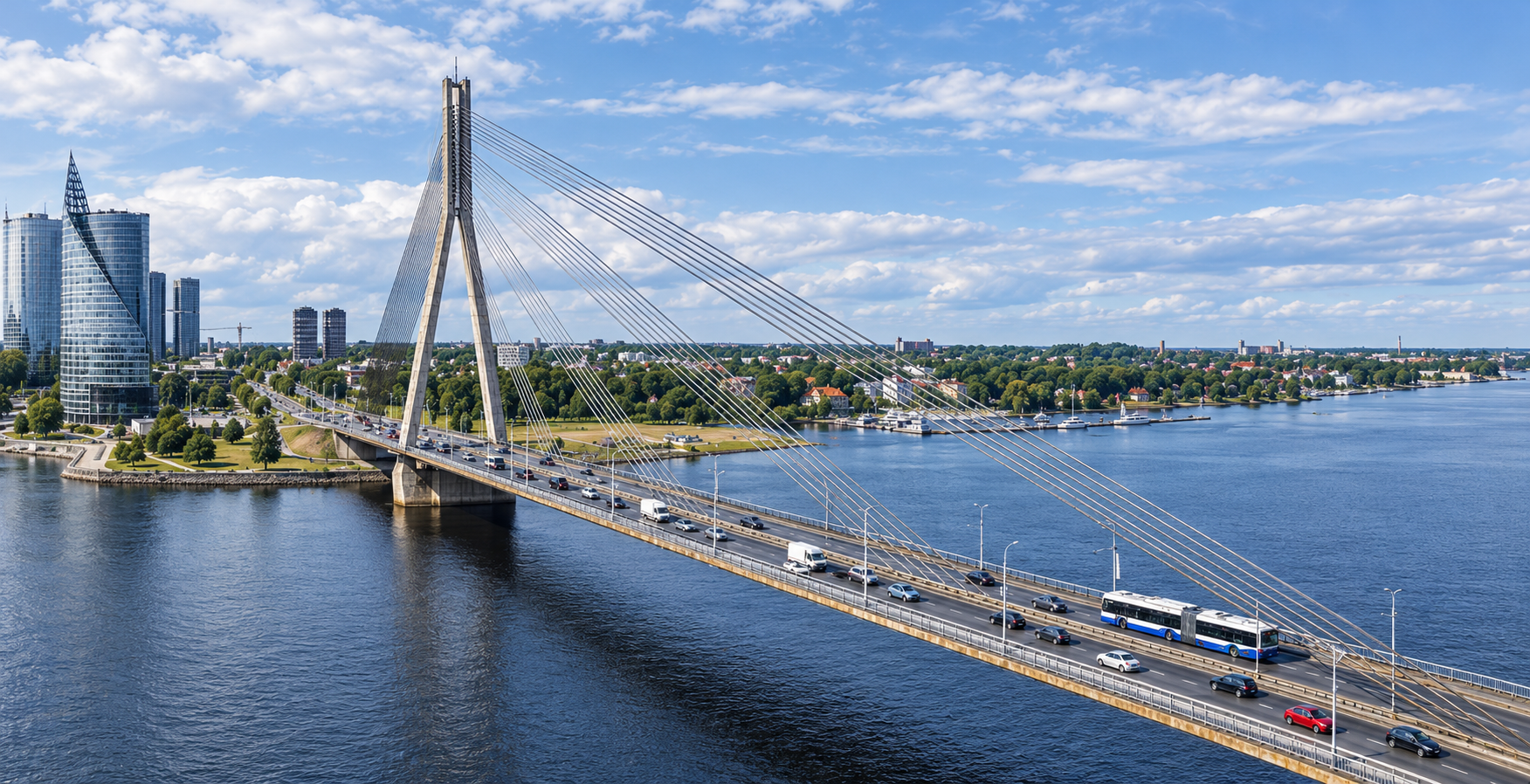
The contract price, technical design and everyday travel are separate questions. Businesses should prepare alternatives without treating an option under discussion as an approved traffic arrangement.

Amber Latvijas balzams' legal protection proceedings have ended, but its cash-flow problems remain. We examine the creditor's proposal, the financial statement adjustment and the decisions still to be made.

Industry revenue, the state budget and litigation exposure are different measures. We explain how to read public estimates and what to check in freight contracts.

Financing costs, legal structure and preserving investment — three checks to assess whether a change of ownership would strengthen a company. We explain the key questions surrounding the LMT and Tet deal.

What does referring a case to prosecutors mean, and what questions should business leaders ask about controls over asset sales? We explain the stage of proceedings and offer a practical checklist.

After the election to the 15th Saeima, businesses will be concerned less with who gets which position than with taxes, workforce availability, bureaucracy and investment conditions. Six issues to follow during government formation and the preparation of the 2027 budget, without confusing election promises with adopted decisions.

The Latvian Chamber of Commerce and Industry, the Employers’ Confederation of Latvia and FICIL oppose a proposal to cap employment residence permits for nationals of certain third countries. The quota is not yet in force, while public explanations are not even fully aligned on the population base used to calculate the 2% threshold.

The Latvian government has backed a 71-measure immigration control plan covering third-country workers, students, self-employment, labour intermediaries and platform work. Most requirements are not yet in force, but employers should already prepare for more detailed identity, working-time and actual-employment records.
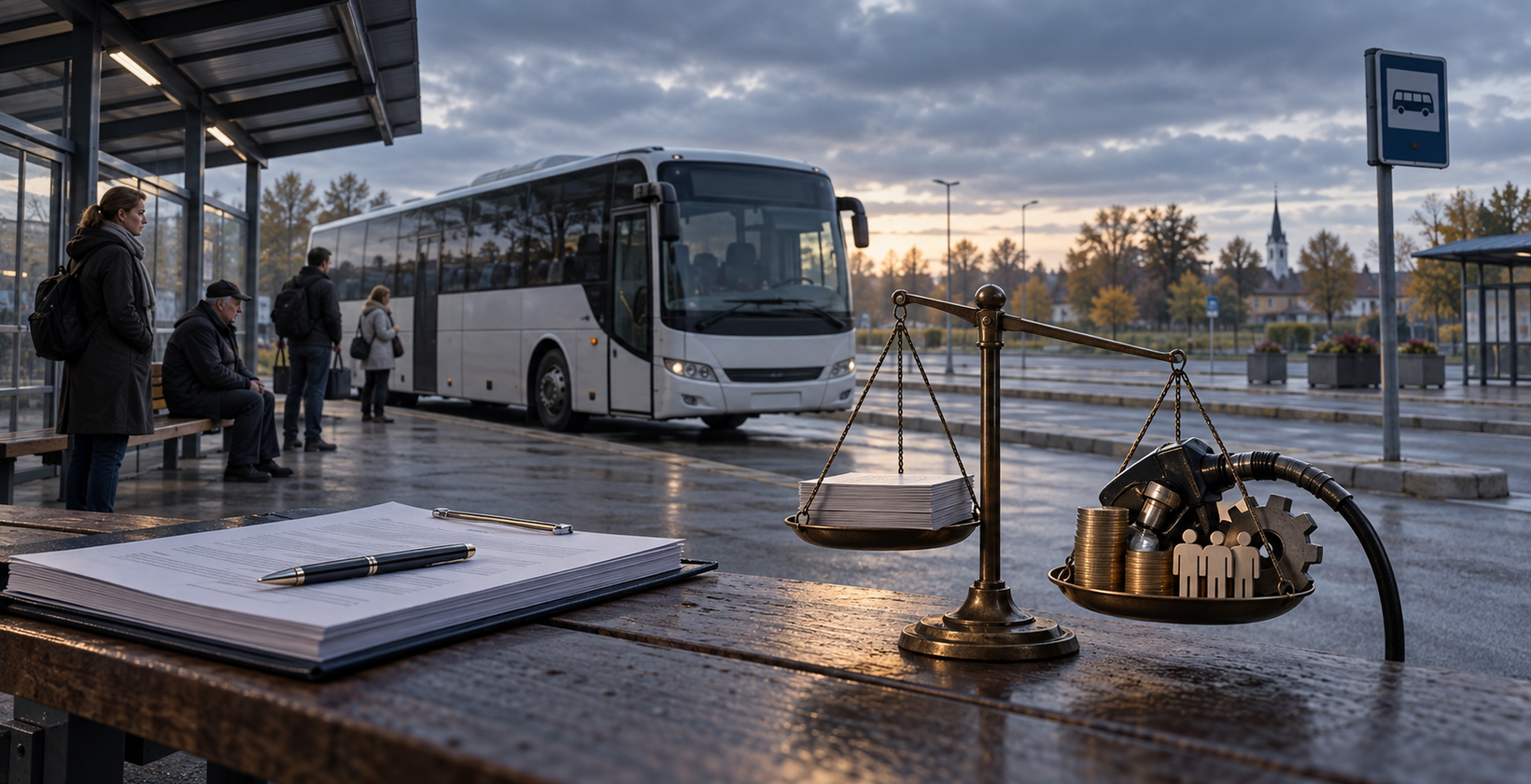
A protest by eight regional bus operators on 16 September could affect up to 3,000 services and 60,000 passengers. The EUR 9.85 million allocated by the government one day earlier helps preserve the route network but does not resolve the dispute over price indexation in ten-year contracts. What does the conflict teach every company bidding for public contracts?
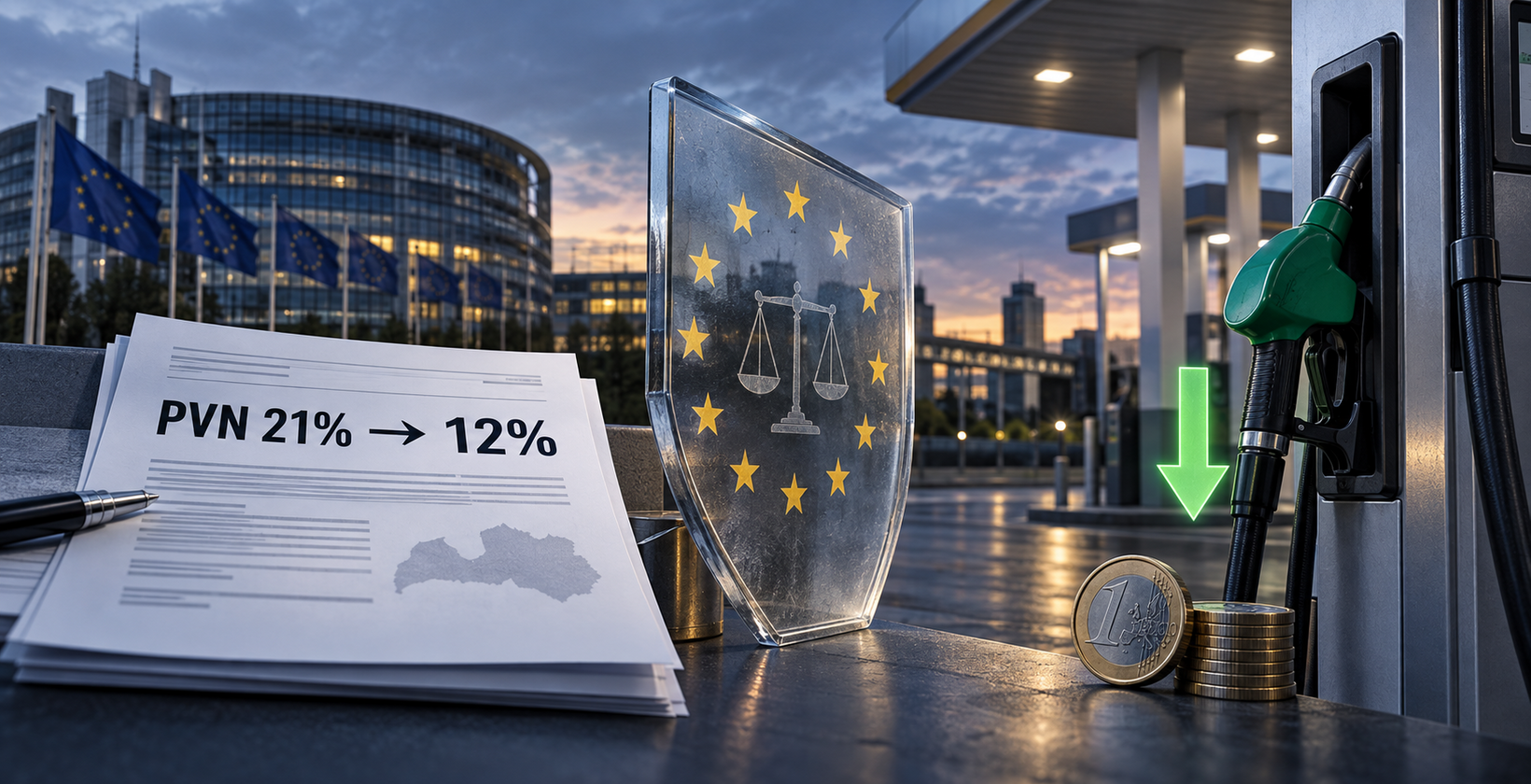
Latvia’s Ministry of Economics estimates that cutting VAT on fuel from 21% to 12% could reduce diesel prices by about 15.6 cents and petrol prices by 14.6 cents per litre if the tax cut were passed on in full. However, there is no government decision, the actual price reduction could be smaller, and the EU VAT Directive currently provides no basis for a reduced rate on road fuel.

A projectile has struck a vessel in the Strait of Hormuz only a day after Saudi Arabia temporarily closed its East–West oil pipeline. Both the main maritime route and its most important land-based alternative are now exposed to disruption.

Marine fuel prices are rising faster than crude oil while traffic through the Strait of Hormuz is declining. Latvian importers and exporters should prepare for transport surcharges, delays and additional working-capital pressure.

Latvia’s retail trade volume increased by 2.5% in July 2026 compared with June—the fastest growth among EU countries with available data. Latvia ranked second in the annual comparison with growth of 7.1%. We examine what this means for businesses and the wider economy.

31 August is the final day for Latvia to achieve the milestones and targets under its Recovery and Resilience Plan. Latvia is preparing a final €503.7 million payment request, which must be submitted to the European Commission by the end of September.

New building energy-efficiency rules entered into force on 28 August. Non-residential buildings with more than 20 parking spaces must provide EV charging infrastructure and bicycle parking by 1 January 2027, while other automation and energy-efficiency requirements have later transition periods.

New data from Latvia's Central Statistical Bureau show retail growth accelerating sharply. July retail turnover rose 7.0% in constant prices, led by building materials, online trade and ICT equipment.

From 24 August, SMEs in Tukums, Limbaži, Saulkrasti and Ogre municipalities can apply for ALTUM energy-efficiency support, including loans of up to €1 million, guarantees of up to 80% and a capital rebate of up to 30%.

The storm of 22–23 August caused Latvia’s most extensive electricity supply disruptions in 20 years. For businesses, the event raises a practical question: how long can operations continue without electricity, internet access and other critical infrastructure?
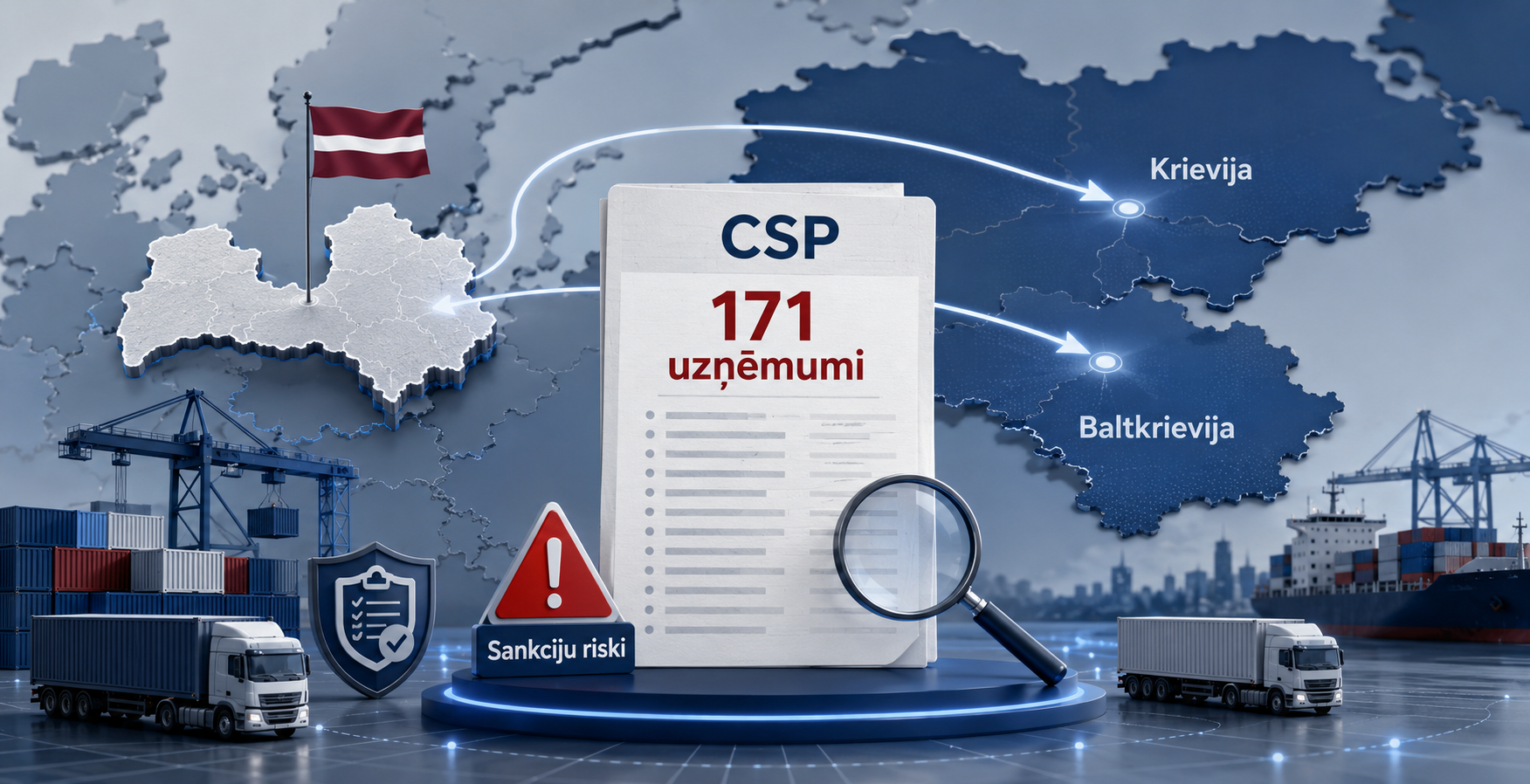
Latvia has published its first list of companies that exported goods to Russia or Belarus or imported goods from those countries in July 2026. It contains 171 businesses, but inclusion does not itself indicate a sanctions violation.

The PPWR does not mean that a Latvian online store automatically needs 27 EPR registrations. However, direct cross-border sales to end users may create EPR obligations in each destination country. This practical guide explains how to reduce compliance costs, standardise packaging and keep selling across the EU.

From 19 August 2026, new consumer credit advertising rules will apply in Latvia. The changes are relevant not only to lenders, but also to retailers advertising instalment payments, leasing or other financing solutions for goods and services.

Modern company formation is no longer tied to renting a physical office or building a team in one location. Virtual offices, remote work and digital tools allow new businesses to reduce costs, recruit talent internationally and operate more flexibly from the very beginning.

Baltijas valstis — Latvija, Lietuva un Igaunija — bieži tiek salīdzinātas kā reģionālās biznesa konkurentes.